
Thumb pain can significantly impact your daily life, making simple tasks difficult and painful. It's therefore important to speak to your GP or healthcare professional to obtain the correct diagnosis for your thumb pain. If you're recovering from a thumb injury, such as a sprain, or managing thumb arthritis, it might be a good idea to immobilise the affected area to promote healing. In these cases, a finger splint or an immobilising thumb orthosis can be an effective solution to stabilise the joint and help reduce pain.

Exercises for thumb pain and arthritis
Regular gentle exercises help maintain mobility and strengthen the muscles around the affected joint. It is recommended to perform these exercises on a daily basis, but make sure to stop if you experience any pain:
- Thumb flexion and extension: Slowly bend your thumb across your palm and then straighten it
- Opposition exercises: Touch your thumb to each fingertip in sequence
- Gentle stretching: Carefully pull your thumb away from your hand to stretch the joint
Actimove splints for stabilisation and immobilisation
Proper immobilisation is crucial when you need to rest your thumb and promote healing. The right support provides stabilisation and relieves pain in your thumb joint. Actimove offers products specifically designed to help with managing thumb pain:
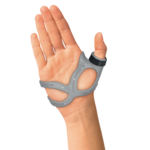
- Actimove Rhizo Forte Thumb Orthosis: Clinically proven to help alleviate pain from osteoarthritis of the thumb
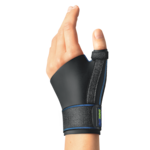
- Actimove Sports Edition Thumb Stabiliser: Offers support during physical activities
The purpose of immobilisation is to provide strong support – ideal when you need to stabilise joints and tendons during recovery. It restricts movement while supporting the natural healing process.
 Professional Line
Actimove Professional Line Rhizo Forte Thumb Orthosis
Clinically proven to help alleviate pain from osteoarthritis of the thumb. The patented thumb brace comes in a low-profile design for maximum comfort.
 Sports Edition
Actimove Sports Edition Thumb Stabiliser Extra Stays
Comfortable thumb stabiliser for managing thumb injuries and keeping finger dexterity. Designed with anatomically shaped stays and adjustable straps.
Hot and cold therapy
An effective approach is to use hot and cold therapy to alleviate thumb pain. This method can provide significant relief and comfort.
- Cold therapy: Reduces inflammation and acute pain. Apply an ice pack wrapped in a thin towel for up to 15-20 minutes
- Heat therapy: Relaxes muscles and improves circulation. Use a warm towel or heating pad at a comfortable temperature for 15-20 minutes
These therapeutic approaches can be particularly beneficial during flare-ups of thumb arthritis pain and before or after hand-intensive activities.
Professional treatment options
Consult with your GP or healthcare professional to discuss additional treatment options:
- Medications
- Specialised physical therapy
- Surgical interventions for severe cases
Your GP, doctor or medical professional can offer personalised recommendations based on the severity of your symptoms. Early intervention often leads to better outcomes when managing thumb arthritis.
Implementing these strategies can help you effectively immobilise your thumb to promote healing, relieve joint pain, and manage arthritis symptoms. Each person’s experience with thumb arthritis is unique, so you may need to try different approaches to find what works best for you.
Further information
For further information regarding symptoms, treatment and support visit NHS England, the NHS Inform for Scotland, and Arthritis UK.


